
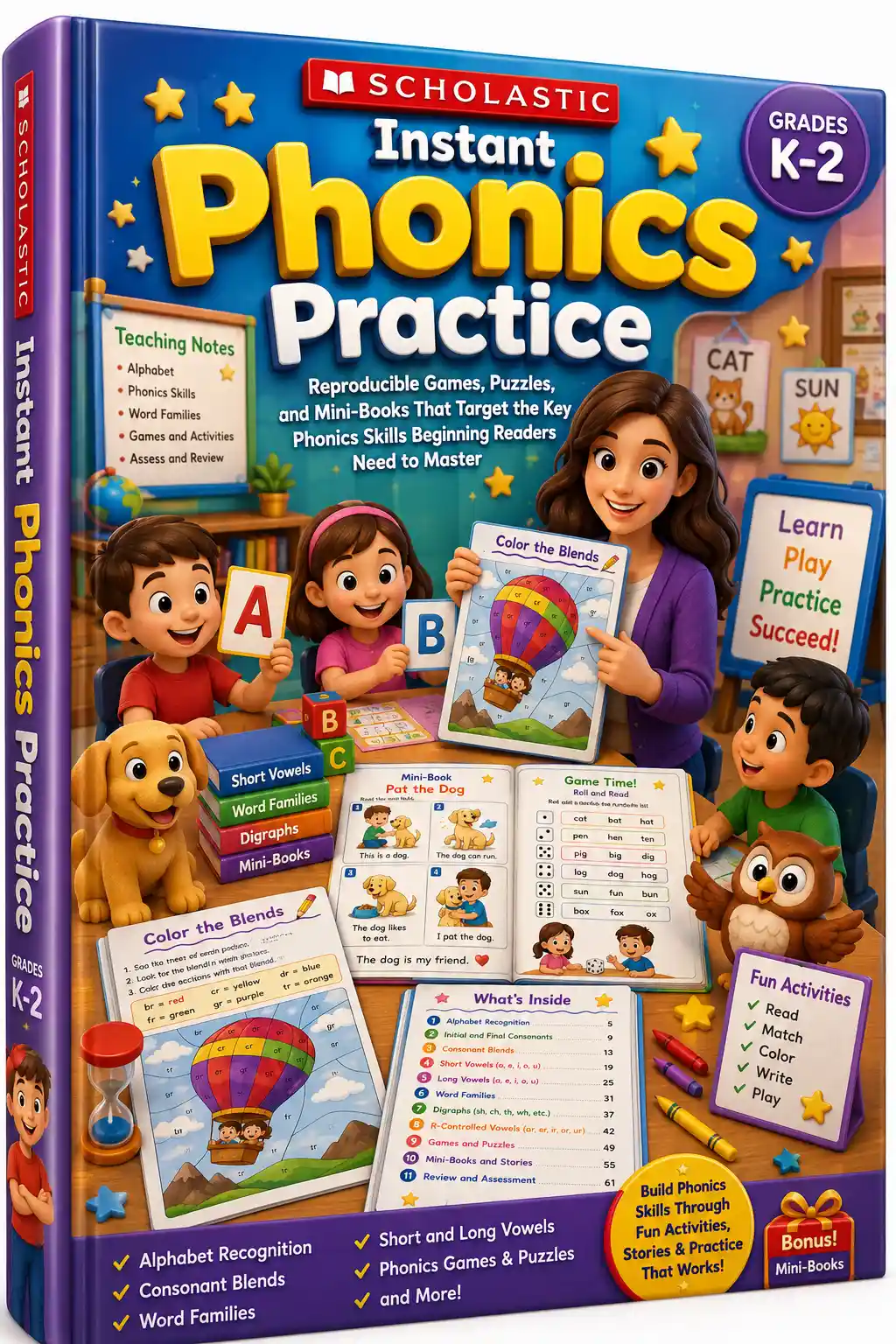
Instant Phonics Practice – A Simple Way to Build Strong Early Reading Skills
Instant Phonics Practice can be a useful learning resource for children who are developing their early reading and spelling abilities. Phonics helps young learners understand the relationship between letters and sounds, giving them the tools they need to decode unfamiliar words. With short, focused activities, children can practice essential skills without feeling overwhelmed.
What Is Phonics Practice?
Phonics practice teaches children how individual letters and groups of letters represent sounds in spoken language. Once children understand these relationships, they can begin blending sounds together to read words.
For example, a child can identify the sounds in c-a-t and blend them to read cat. Repeated practice helps make this process more automatic and builds confidence.
Why Is Instant Phonics Practice Helpful?
Instant Phonics Practice focuses on providing children with quick opportunities to review important phonics skills. Short activities can be particularly effective for young learners because they allow children to concentrate on one skill at a time.
Practice may include identifying beginning sounds, matching letters with sounds, blending phonemes, completing simple words, and reading short word lists. These activities can reinforce lessons introduced in the classroom.
Develop Letter-Sound Recognition
Strong letter-sound knowledge is an important foundation for reading. Children should become familiar with common letter sounds before moving on to more complex spelling patterns.
Parents and teachers can show a letter and ask the child to say its sound. They can then introduce simple words containing that sound. For example, after practicing m, children can read words such as map, mat, and man.
Improve Blending and Decoding
Blending allows children to combine individual sounds to read a complete word. Decoding helps them use their phonics knowledge to work out unfamiliar words.
Instant Phonics Practice can support these skills through repeated exercises. Encourage children to say each sound clearly before blending them together.
For example:
s – u – n → sun
After reading the word, children can write it or use it in a simple sentence.
Keep Practice Short and Consistent
Young learners do not necessarily need long study sessions. Ten to fifteen minutes of focused phonics practice each day can provide valuable repetition.
Use a mixture of reading, writing, sound recognition, and word-building activities. If a child finds a particular sound difficult, return to it regularly instead of moving on too quickly.
Make Phonics Enjoyable
Learning becomes more engaging when children can participate actively. Try using letter cards, magnetic letters, picture matching, word searches, or simple phonics games.
Parents can also read short stories with children and ask them to identify words containing the sounds they have recently learned.
Who Can Benefit?
Instant Phonics Practice can be useful for preschoolers, kindergarten students, and early elementary learners who are developing foundational literacy skills. Teachers, parents, tutors, and homeschool educators can use quick phonics activities for classroom practice, revision, homework, or additional support at home.
Final Thoughts
Instant Phonics Practice offers a straightforward way to reinforce letter-sound knowledge, blending, decoding, reading, and spelling. By practicing regularly through short and engaging activities, children can strengthen their phonics skills and become more confident early readers. A consistent, encouraging approach can make a lasting difference in a child’s literacy development.